Author name: Muhd Nihad

influencer marketing
Uncategorized

Top 10 Influencer Marketing Strategies for Businesses in Qatar

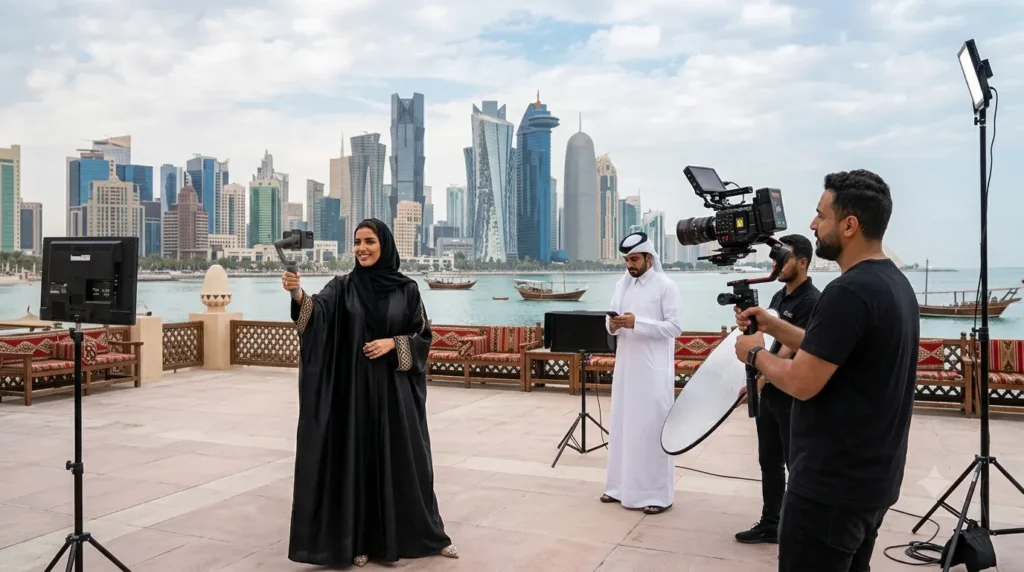
Top 10 Influencer Marketing Strategies for Businesses in Qatar Influencer marketing Qatar campaigns work when the creator’s audience matches the customer you want, not when the creator simply has the biggest following. Qatar is a compact market, with DataReportal counting 2.95 million social media user identities in October 2025, so audience fit matters. This guide gives ten influencer marketing strategies Qatar businesses can use, a way to vet creators, a cost framework that avoids invented prices, and a simple method for measuring results. It is written for business owners and marketing managers who want a campaign they can explain, budget and track. Why Influencer Marketing Matters for Businesses in Qatar? Influencer marketing Qatar campaigns help a business get in front of a specific audience through a person that audience already follows. The practical benefits are brand awareness, product discovery, customer engagement and, when the campaign is built for it, leads. A recommendation from a familiar creator can feel more personal than a brand advertisement, so some businesses pair influencers with paid ads. Audience fit is the catch. NapoleonCat’s estimates put Instagram at about 2.09 million users in Qatar in May 2026, with men making up 65.5% and the 25 to 34 age group the largest. These are addressable-audience estimates, not exact headcounts, but they show why a creator whose followers are mostly outside your target market can waste a budget. If you sell to women, to families or to a specific nationality, check who actually follows the creator before you build an influencer marketing Qatar plan around them. If you want a second opinion on goals and creator shortlists, a digital marketing expert in Qatar can review the plan before you commit spend. Top 10 Influencer Marketing Strategies for Businesses in Qatar Each strategy below covers why it matters, how to apply it, an illustrative example and a KPI. The examples are hypothetical and are there to show the method, not to report real results. 1. Define Your Marketing Goals and Target Audience in Qatar Start every influencer marketing Qatar campaign with one goal, because the goal decides which creators, formats and metrics make sense. Brand awareness campaigns need reach and video views. A lead campaign needs a clear action, such as a booking form or WhatsApp enquiry. Then describe your target audience in Qatar by language, age, interests and where they live. Illustrative example: a dental clinic wants more consultation bookings from families, not general awareness. It writes the goal as “40 booked consultations from social media in 60 days” and picks creators whose audiences include parents. Mistake: setting “get more followers” as the goal, which no sales team can use. KPI: cost per qualified lead against your target. 2. Find the Right Influencers and Qatar Content Creators For influencer marketing Qatar shortlists, look for Qatar content creators whose posts already sit close to your category. Search relevant hashtags and locations, check who comments on competitors’ posts, and ask existing customers whom they follow, which shows the social media influencers Qatar customers already engage with. Build a shortlist of 10 to 15 before contacting anyone, then rank them against your goal. Illustrative example: a Doha coffee shop lists creators who post cafe reviews and weekend plans, then drops two whose audiences are mostly abroad. Mistake: choosing by follower count alone. KPI: share of shortlisted creators whose audience matches your target market. 3. Collaborate With Micro-Influencers in Qatar Micro-influencers in Qatar have smaller audiences and often narrower niches, which can suit small businesses with a limited influencer marketing Qatar budget. A creator focused on home cooking, fitness or fashion may speak to the exact buyer you want. Agree on a small package first, such as two posts and three stories, and judge the results before expanding. Illustrative example: an online skincare shop sends products to five micro-influencers with unique discount codes, then compares code redemptions. Mistake: assuming small always means cheap or effective, since creators with small audiences still need vetting. KPI: engagement rate and code redemptions per creator. 4. Use Instagram and TikTok Strategically Pick the platform for each influencer marketing Qatar campaign from your audience, not from habit. Instagram works for visual products, stories and link-based follow-ups. TikTok suits short demonstrations and trend-led content. Test both with a small budget, since no source reviewed for this guide names a reliable platform winner for every Qatar business. Match Instagram influencers Qatar brands trust to visual products, and TikTok influencers Qatar audiences follow to short demonstrations. Illustrative example: a fashion label runs the same product story with one Instagram creator and one TikTok creator, using separate tracking links. Mistake: reposting identical content everywhere without adapting it. KPI: cost per click and cost per lead by platform. 5. Create Relevant Arabic and English Content Language shapes who feels spoken to in influencer marketing Qatar campaigns. Qatar’s audience includes both Arabic and English speakers, so decide the language per segment. Some campaigns work in Arabic captions with English product names, others in English only. Ask creators which language their audience responds to and check the comments for proof. Illustrative example: a real estate firm publishes an Arabic walkthrough for local buyers and an English version for expatriate renters, each with its own contact link. Mistake: translating word for word and losing tone. KPI: engagement and enquiry rate by language version. 6. Build Long-Term Brand-Influencer Partnerships One-off posts give you a spike and then silence, and influencer marketing Qatar results improve with repetition. Repeated brand-influencer partnerships let the audience see the creator use the product over time, and they give you data to improve each round. Start with a three-month plan, review it monthly, and keep the creators who deliver relevant leads. For influencer campaign management Qatar teams can keep the process modest: a shared content calendar, written approvals and one monthly report. Illustrative example: a restaurant works with one food creator for a quarter, covering a menu launch, a weekend special and a Ramadan menu. Mistake: ending a partnership after one
Uncategorized

10 Digital Marketing Trends Shaping the GCC Market in 2027

10 Digital Marketing Trends Shaping the GCC Market in 2027 Best AI tools to use in marketing field .GCC digital marketing trends are moving faster than most annual plans can handle. Saudi Arabia alone had 38.6 million social media user identities in October 2025, equal to 111 percent of its population, according to DataReportal. People in the Gulf are online, on mobile and comfortable in two languages. At the same time, advertising rules are getting stricter and search is changing shape. This guide covers ten shifts to plan for in 2027. Each one comes with a short action you can start this quarter. It is written for business owners, in-house marketers and agencies working across Saudi Arabia, the UAE, Qatar, Kuwait, Bahrain and Oman. The 10 trends at a glance (click any point to jump to its description) AI search optimization becomes a core skill Arabic content becomes a trust signal Short-form video leads on TikTok and Snapchat Influencer marketing now runs under licensing rules WhatsApp and social commerce close the sale First-party data replaces borrowed audiences Local search decides who gets the call AI ad automation shifts the work toward creative Retail media grows inside marketplaces Events and Vision 2030 shape the campaign calendar Why GCC Digital Marketing Trends Matter in 2027 GCC digital marketing trends matter because the region combines high connectivity with fast regulation and a young, mobile audience. A tactic that worked in 2024 may now break a permit rule or fall behind a new search feature. Digital marketing in GCC countries is not one market. Saudi Arabia is large and rule-heavy. The UAE is crowded and competitive. Qatar is smaller, with a high-value audience and strong local search habits. A single regional plan will miss details in all three, so each trend below notes where the local differences show up. <a id=”trend-1″></a> 1. AI Search Optimization Becomes a Core Skill AI search optimization means shaping your content so AI-powered search tools can understand it, quote it and send people to it. This matters in the Gulf because Google rolled out AI Mode in Modern Standard Arabic on 8 October 2025, after launching it in English across the region in August 2025, according to Google’s MENA blog. Google also says early AI Mode users ask questions two to three times longer than traditional queries. Longer questions reward pages that answer one clear question per section. What to do: Rewrite key pages so each section answers a single question in its first sentence. Add an FAQ block, clear author details and accurate business information in English and Arabic. <a id=”trend-2″></a> 2. Arabic Content Becomes a Trust Signal Arabic content is no longer a translation job done at the end. It is a ranking factor, an ad-performance factor and a trust signal. Readers can tell when a page was machine-translated. Write search-facing pages in clear Modern Standard Arabic. Write social captions, scripts and ads in the dialect your audience speaks, such as Khaleeji for Gulf audiences. Have a native editor review every piece. Keep brand terms consistent between the English and Arabic versions so AI search tools can connect them. What to do: Pick your five most valuable pages and rebuild them in Arabic from scratch, not from a translation file. <a id=”trend-3″></a> 3. Short-Form Video Leads on TikTok and Snapchat Short-form video is the main format for reaching Gulf audiences on social platforms. A 2025 regional study summarised by MEA Tech Watch reported that TikTok is dominant across the Gulf states and that Snapchat has 24.7 million users in Saudi Arabia. Vertical clips of 15 to 45 seconds work best for product demos, behind-the-scenes shots and customer answers. Put the hook in the first two seconds and add Arabic captions. What to do: Film one batch of ten clips per month from a single shoot day, then cut each into versions for TikTok, Snapchat and Instagram Reels. <a id=”trend-4″></a> 4. Influencer Marketing in GCC Runs Under Licensing Rules Influencer marketing in GCC markets is now a regulated activity. From 1 February 2026, anyone advertising online from the UAE must hold an Advertiser Permit from the UAE Media Council, covering paid and unpaid promotion, as explained by Middle East Briefing. Saudi Arabia requires its “Mawthooq” licence for advertising by creators, as outlined by Arab News. The commercial side is growing too. The UAE influencer marketing sector was valued at $69 million in 2024 and is projected to reach nearly $97 million by 2030, The New Arab reports. Brands carry risk when a creator is unlicensed. A digital marketing expert in GCC can check permits, contracts and disclosure wording before a campaign goes live. What to do: Add a permit or licence number check to every creator contract and keep a copy on file. <a id=”trend-5″></a> 5. WhatsApp and Social Commerce Close the Sale Social commerce in the Gulf often ends in a chat, not a checkout page. Customers see a product on Instagram, TikTok or Snapchat, then message the brand on WhatsApp to ask about price, size or delivery. Click-to-WhatsApp ads, product catalogues and saved replies shorten that path. The weak point is usually response time. A fast, helpful reply wins the order. A slow one sends the customer to a competitor. What to do: Set a reply-time target, write saved answers for the ten most common questions in Arabic and English, and track which ads produce chats that turn into orders. <a id=”trend-6″></a> 6. First-Party Data Replaces Borrowed Audiences First-party data is the information customers give you directly: email addresses, phone numbers, purchase history and survey answers. It matters more each year because privacy rules and browser changes limit third-party tracking. Saudi Arabia, the UAE and Qatar have all introduced personal data protection rules, and the details differ by country, so check the current text for each market you sell in. Collect consent clearly, store data securely and explain why you are asking. What to do: Build a simple CRM, add a consent line to every

Uncategorized

15 AI Tools Digital Marketing Experts Should Know in 2026.

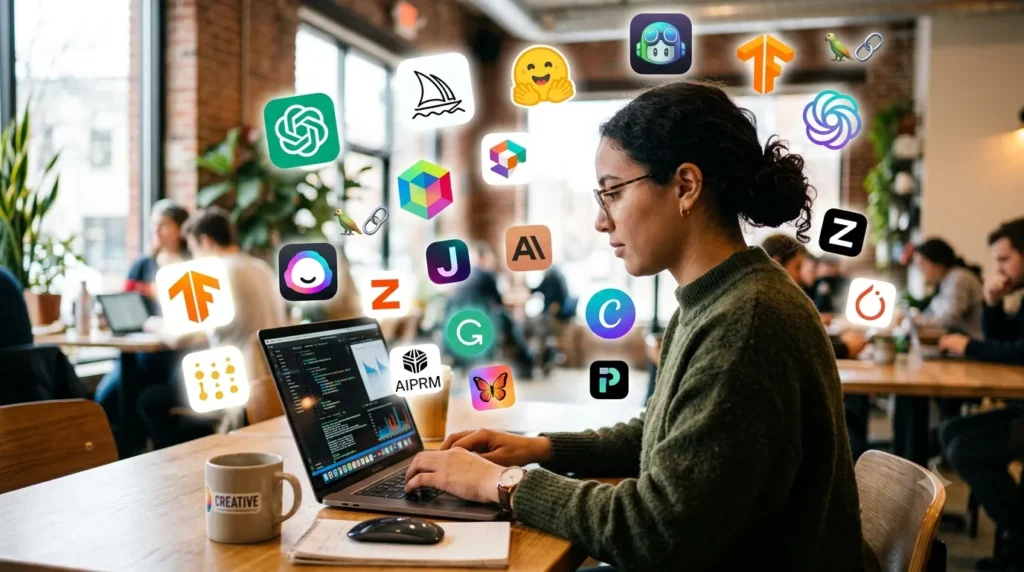
15 AI Tools Digital Marketing Experts Should Know in 2026 The best AI tools digital marketing teams use in 2026 handle drafting, research, design, email, and reporting, so people can spend their time on strategy. This guide covers 15 AI marketing tools, what each one does, and who should use it. Every tool is grouped by job, so you can find the right one quickly. If you want help turning these tools into a working plan, a digital marketing expert can map them to your goals and budget. What are AI tools for digital marketing? AI tools for digital marketing are software products that use machine learning or generative AI to speed up marketing tasks. They write copy, analyze data, create images, schedule posts, and run marketing automation. They fall into five groups: content and research, SEO, design and video, email and automation, and analytics and ads. Most teams need one or two tools from each group, not all fifteen. Best AI tools digital marketing teams use for content and research This group covers the tools you open first thing in the morning. They handle AI content creation, research, and first drafts. 1. ChatGPT ChatGPT is a general-purpose AI assistant from OpenAI. Marketers use it for AI content creation tasks like outlines, ad variations, email subject lines, and campaign brainstorming. It works best when you give it a clear brief and your brand voice. Best for: fast drafts, ideation, and repurposing content. 2. Claude Claude is an AI assistant from Anthropic. It handles long documents well, so it suits summarizing research, rewriting long-form content, and analyzing customer feedback. Many marketers use it for careful editing as well as drafting. Best for: long-form writing, editing, and document analysis. 3. Perplexity Perplexity is an AI answer engine that shows the sources behind its responses. That makes it useful for competitor research, market sizing, and fact-checking before you publish. Always open the cited sources yourself. Best for: research with traceable sources. 4. Jasper Jasper is built for marketing teams. It stores brand voice and style rules, then applies them to blog posts, ads, and social copy. It fits teams that scale AI content creation and need consistent tone across writers. Best for: brand-consistent copy at volume. AI tools for SEO that improve rankings SEO is where AI tools digital marketing specialists adopt earliest, because search work involves large amounts of data. These AI SEO tools cover research and on-page optimization. 5. Semrush Semrush is an SEO platform for keyword research, competitor analysis, site audits, and rank tracking. Its AI features help with content ideas and tracking how your brand appears in AI-driven search. It suits marketers who run search-led strategies. Best for: keyword research and competitor analysis. 6. Surfer SEO Surfer SEO compares your draft with pages that already rank and suggests terms, headings, and structure. It is a practical editor for on-page work. Use its suggestions as guidance, not as a checklist to copy. Best for: on-page content optimization. AI tools for design and video Visual work used to need a designer for every small change. These tools let marketers produce good assets alone, and a designer can then refine the best ones. 7. Canva Canva includes AI features for generating images, resizing designs, and editing photos. Brand kits keep fonts and colors consistent across social posts, presentations, and ads. It is the easiest design tool for small teams. Best for: social graphics and quick creatives. 8. Midjourney Midjourney generates original images from text prompts. Marketers use it for campaign concepts, mood boards, and unique visuals that stock libraries lack. Check the usage terms before using its images in paid campaigns. Best for: custom concept art and campaign visuals. 9. Descript Descript lets you edit video and audio by editing the transcript. Delete a sentence in the text and it disappears from the recording. That saves hours on podcasts, webinars, and short social videos. Best for: editing video and audio quickly. AI marketing tools for email, social, and automation Personalization and timing decide whether a message gets read. These tools use generative AI and customer data to send the right message at the right moment. A digital marketing expert can set up these workflows so they run without constant supervision. 10. HubSpot HubSpot combines a CRM with marketing, sales, and service tools. Its AI assistant helps write emails, summarize contact records, and build content. It suits teams that want one platform for marketing automation and the whole customer journey. Best for: all-in-one CRM and inbound marketing. 11. Klaviyo Klaviyo specializes in email and SMS for ecommerce brands. It uses shopper behavior to segment audiences and trigger messages such as abandoned cart reminders. Online stores get the most from it. Best for: ecommerce email and SMS personalization. 12. Buffer Buffer schedules posts across social platforms and includes an AI assistant that drafts and rewrites captions. Its simple interface suits solo marketers and small businesses that want consistency without a heavy tool. Best for: simple social media scheduling. 13. Zapier Zapier connects thousands of apps and automates the handoffs between them. A new lead in a form can create a CRM record, send a welcome email, and notify your team. Its AI features let you describe a marketing automation workflow in plain language. Best for: connecting tools and removing manual tasks. AI tools digital marketing analysts use for data and ads Reporting is where AI saves the most time, and predictive analytics gives you a head start on trends. These tools turn raw numbers into predictive analytics and automated campaign decisions. 14. Google Analytics 4 Google Analytics 4 tracks website and app behavior. It includes machine learning features such as predictive analytics and anomaly detection, which flag unusual traffic changes. It is free, which makes it a sensible starting point. Best for: free analytics and predictive audiences. 15. Google Ads Performance Max Performance Max is a Google Ads campaign type that uses automation to place your ads across Google’s channels. You supply assets,

Uncategorized

Email Marketing Saudi Arabia: What Works for Gulf Businesses in 2026​

Email Marketing Saudi Arabia: What Works for Gulf Businesses in 2026 Email marketing Saudi Arabia (التسويق عبر البريد الإلكتروني في السعودية) campaigns start from a strong base. DataReportal counted 34.4 million internet users in the Kingdom at the end of 2025, a penetration rate of 99.0%, so almost everyone you want to reach has an inbox. The harder questions are whether they gave you permission, whether your message reaches the inbox, and whether it reads naturally in Arabic or English. This guide covers what works in 2026 for Gulf businesses: strategy, consent under Saudi law, automation, language, deliverability and seasonal timing. Quick answer What works for email marketing Saudi Arabia in 2026 is a permission-based list, bilingual content, a few automated flows, a correctly authenticated sending domain, and reports built on clicks and sales instead of opens. It applies to email marketing in KSA and to email marketing GCC plans. Why email still matters for Gulf brands Email gives a business an audience it owns. You do not pay for each impression, and no algorithm hides your message from people who asked for it. That counts in a market where attention is split between Snapchat, TikTok, Instagram and WhatsApp. Strong email marketing GCC programs treat these channels as partners: social posts and ads bring people to a sign-up form, and email carries the offers, guides and receipts that follow. Email marketing Saudi Arabia budgets also build first-party data you control, and the same holds for email marketing Middle East campaigns. [Internal link: Digital marketing in the GCC] Build an email marketing strategy that fits Gulf buyers A workable email marketing strategy answers four questions: who you write to, what each group should do next, which language they prefer, and when they tend to buy. Start by splitting your list by language, city and customer stage, because a first-time subscriber in Riyadh needs a different message from a repeat buyer in Jeddah. Then plan a calendar around local moments such as Ramadan, Eid, Saudi National Day and White Friday. An email marketing Saudi Arabia plan should also stay small at the start. One list, one welcome email and one regular newsletter will teach you more than a ten-flow setup that nobody maintains. Email marketing for small business Saudi Arabia Email marketing Saudi Arabia works well for a clinic, salon or consultancy when it stays simple and personal: appointment reminders, seasonal offers and short tips written in the owner’s voice. Collect addresses at the front desk and on the website, and send one useful message a month before trying anything more complex. Email marketing for e-commerce Saudi Arabia Online stores running email marketing Saudi Arabia campaigns gain the most from emails triggered by behavior, such as a reminder for an abandoned cart, a back-in-stock notice, or a review request after delivery. Product pages and checkout supply the data behind these messages. Email list building and consent for email marketing in KSA under the PDPL Email list building starts with permission, because the law asks for it. For email marketing Saudi Arabia teams, the consent rule is simple to state. Baker McKenzie’s Saudi data protection handbook says the Personal Data Protection Law (PDPL) requires prior opt-in consent before a business sends marketing by email. It also requires a clear way to stop receiving messages that is at least as easy as giving consent, and the Implementing Regulations call for the sender’s identity to be stated plainly. That review dates from December 2024, so check the current text with SDAIA or a Saudi lawyer before you launch. Email marketing Saudi Arabia rules can change, and your list is only as safe as your records. Google’s sender guidelines add practical habits. Confirm each address before subscribing someone, avoid opt-in boxes that are ticked by default, and never buy email addresses. Email marketing consent Saudi Arabia: what to record Email marketing Saudi Arabia audits go smoothly when you keep a record for every subscriber: the date, the form or page they used, the wording they agreed to, and the language they chose. Use an unticked checkbox at checkout, a clear promise on each sign-up form, such as “Ramadan offers and tips, twice a month”, and a free planner or guide as the reward. Treat each channel separately, so an email opt-in does not stand in for WhatsApp or SMS permission. Email automation: four flows to set up first Email automation lets a small team send timely messages without writing each one by hand, which suits email marketing Saudi Arabia businesses with few staff. Start with four flows. A welcome series of three emails over about a week: who you are, your most useful content, and a first offer. A cart or enquiry reminder, sent soon after someone leaves without finishing. A post-purchase email with usage tips and a review request. A re-engagement email for people who have gone quiet, followed by removing those who still do not respond. Each automated message needs the same unsubscribe link (إلغاء الاشتراك) and sender details as a manual campaign. Google suggests unsubscribing recipients who do not open or read your messages, which helps protect your sender reputation. Email marketing Saudi Arabia teams with limited time get the most from these four flows before building anything fancier. Arabic email marketing (التسويق عبر البريد الإلكتروني بالعربية): write, design and test in both languages Arabic email marketing needs more than a translated copy of the English version. Ask for a language preference at sign-up and send each subscriber the version they chose. Have a native writer draft the Arabic subject lines and body text, because literal translation often reads stiffly. In the HTML, set the language and set the text direction to right to left (dir=”rtl”) for Arabic emails, then test the layout on real phones in Gmail, Outlook and Apple Mail, since mail apps render mixed Arabic and English text differently. Most email marketing Saudi Arabia lists end up bilingual, so plan both versions from the start. In email marketing Saudi

Uncategorized

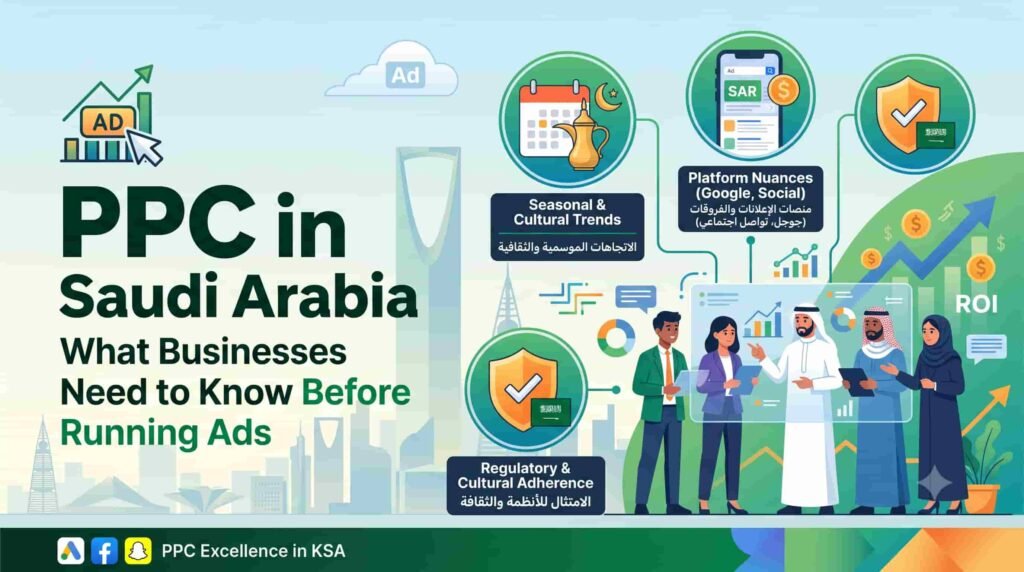
PPC in Saudi Arabia: What Businesses Need to Know Before Running Ads

PPC in Saudi Arabia: What Businesses Need to Know Before Running Ads Pay per click advertising in Saudi Arabia (الإعلان بالدفع لكل نقرة) works like it does anywhere else: you bid, you write an ad, and you pay when someone clicks. What differs is the audience, the mix of Arabic and English, the platforms with the most reach, and a set of government rules that decide who can advertise, what an ad must say and how you may use customer data. This guide covers the platforms and a first-campaign plan, with a full section on regulations so you know the rules before you spend. ملخص بالعربية: الإعلان بالدفع لكل نقرة (PPC) في السعودية يعني أنك تدفع فقط عندما ينقر شخص على إعلانك في جوجل أو يوتيوب أو سناب شات أو تيك توك. تحتاج الحملات إلى كلمات مفتاحية بالعربية والإنجليزية، وإلى الالتزام بأنظمة المملكة مثل ترخيص «موثوق» ونظام التجارة الإلكترونية ونظام حماية البيانات الشخصية، وموافقة الهيئة العامة للغذاء والدواء على بعض المنتجات. What is pay per click advertising in Saudi Arabia? Pay per click (PPC) advertising in Saudi Arabia is paid advertising (الإعلانات المدفوعة) where you are charged only when a person clicks your ad, usually on Google Search, YouTube, Snapchat, TikTok or Meta. You choose keywords (الكلمات المفتاحية) or audiences, set a bid and a daily budget, and write the ad. Search ads reach people who are already looking for what you sell. Social ads reach people by age, city and interest, even when they are not searching. Why does PPC work in Saudi Arabia? PPC works in Saudi Arabia because nearly everyone is online and the advertising market is growing fast. Saudi Arabia had 34.4 million internet users at the end of 2025, a penetration rate of 99 percent. The median age is 29.6, and median mobile download speed was about 194 Mbps. Ken Research expects the KSA digital advertising market to grow from USD 2.05 billion in 2025 to USD 4.16 billion by 2031, about 12.5 percent a year. Another regional analysis puts total Saudi ad spend near USD 4.2 billion, with digital at roughly 83 percent. Estimates differ by source, but both point up. PPC gives results in days. SEO takes months. Which PPC platforms work best in Saudi Arabia? Google Search is best for buyers with clear intent, and Snapchat and TikTok give the widest reach among Saudi adults. Google Search and YouTube (إعلانات جوجل ويوتيوب): Google’s tools showed 27.5 million YouTube users in Saudi Arabia in late 2025. Snapchat (سناب شات): 25.3 million users, covering 89 percent of adults aged 18 and over. Good for retail, food, events and short vertical video. TikTok (تيك توك): 38.6 million adult users in its ad tools. Instagram and Facebook (إنستغرام وفيسبوك): 18.2 million and 17.7 million users. Useful for lead generation and remarketing. X (إكس): potential ad reach fell 6.8 percent between the end of 2024 and late 2025. LinkedIn (لينكدإن): 12.0 million members, about 75 percent male. A B2B channel. These are registered members, not active users. Source: DataReportal Digital 2026: Saudi Arabia. Should PPC campaigns use Arabic, English or both? Run both, in separate campaigns, because Saudi searchers use both languages and the keywords are not direct translations. “digital marketing agency Riyadh” and “التسويق الرقمي في الرياض” have different competition and cost. Have a native Arabic writer produce the ad copy. Translation software tends to sound stiff. Keep formal Arabic for services and use a lighter tone for social video. Compare results by language every week and move budget to the one that converts. What Arabic keywords should you use for PPC in Saudi Arabia? Start with Arabic phrases that match what Saudi buyers type, then check volume and cost in Google Keyword Planner. English Arabic Pay per click advertising الإعلان بالدفع لكل نقرة Paid ads in Saudi Arabia الإعلانات المدفوعة في السعودية Google Ads Saudi Arabia إعلانات جوجل في السعودية Snapchat ads إعلانات سناب شات TikTok ads إعلانات تيك توك Digital marketing in Riyadh التسويق الرقمي في الرياض Digital marketing agency وكالة تسويق رقمي Advertising rules in Saudi Arabia أنظمة الإعلان في السعودية Mawthooq licence ترخيص موثوق Cost per click تكلفة النقرة Add city names to Arabic phrases: الرياض، جدة، الدمام. Check spelling variants, since جوجل and قوقل are both used. Keep Arabic and English keywords in separate campaigns so you can compare results. What are the PPC regulations and government rules in Saudi Arabia? Saudi PPC campaigns fall under four main sets of rules: the media regulator’s licence for social media advertising, the Ministry of Commerce’s e-advertising rules, the Personal Data Protection Law and the Food and Drug Authority’s approval rules. Platform policies add a fifth layer. Rules change, so confirm the current position with the authority or a local adviser before you launch. This is general information, not legal advice. Who regulates advertising in Saudi Arabia? Four bodies matter most for online ads. General Authority for Media Regulation (GAMR, الهيئة العامة لتنظيم الإعلام, formerly GCAM): licenses people who publish ads on social media through the Mawthooq programme (برنامج «موثوق»). Ministry of Commerce (وزارة التجارة): enforces the E-Commerce Law (نظام التجارة الإلكترونية), including rules on misleading ads and ad disclosure. Saudi Data and AI Authority (SDAIA, سدايا): enforces the Personal Data Protection Law (نظام حماية البيانات الشخصية). Saudi Food and Drug Authority (SFDA, الهيئة العامة للغذاء والدواء): approves advertising for food, medicines, medical devices and related products. Do you need a Mawthooq licence? You need a Mawthooq licence (ترخيص «موثوق») when individuals publish paid advertising content on social media accounts, which mostly affects campaigns that use influencers or creators (المؤثرين). The regulator requires individuals to hold a licence before publishing advertising content on social media. The licence is valid for three years and tied to an account registered with the Authority. The licence covers X, Instagram, YouTube, TikTok, Snapchat and Facebook. Licence holders must stop advertising content immediately when the authority asks. GAMR’s guidance says a person promoting their own work on a personal account does not need a licence, while a bank

Uncategorized

SEO in Saudi Arabia: The Complete Guide to Ranking in KSA

SEO in Saudi Arabia: The Complete Guide to Ranking in KSA SEO in Saudi Arabia means ranking on Google for searches typed in Arabic and English, with extra attention to local results in cities like Riyadh, Jeddah and Dammam. Google handled 95.81 percent of searches in the country in June 2026, so the work is almost entirely about one search engine. The steps that matter most are bilingual keyword research, a site with separate Arabic and English URLs, a complete Google Business Profile and fast mobile pages. This guide covers each one, with the answer at the start of every section. statcounter Why does SEO matter in Saudi Arabia? SEO matters in Saudi Arabia because nearly the whole population is online and almost all searches go through Google. Saudi Arabia had 34.4 million internet users at the end of 2025, a penetration rate of 99 percent. datareportal The median age is 29.6, and 85.4 percent of people live in urban areas, so most customers are young and concentrated in cities. datareportal Google’s share of mobile searches in Saudi Arabia is 97.95 percent. statcounter Bing reaches 5.92 percent on desktop, which makes it a minor extra for B2B sites. statcounter Sources: DataReportal and StatCounter. How do you do keyword research for SEO in Saudi Arabia? Keyword research for SEO in Saudi Arabia needs two separate lists, one in Arabic and one in English, because the same need is searched differently in each language. “SEO Riyadh” and “تحسين محركات البحث في الرياض” can differ in volume, competition and intent. Use Google autocomplete, the related searches under the results and Google Keyword Planner to find real phrases. Add spelling variants and dialect words, since Arabic searches often skip diacritics. Check Google Search Console for queries that already bring impressions and improve those pages first. Assign one main keyword to each page so city pages do not compete with each other. How do you set up an Arabic and English website for Saudi SEO? A bilingual Saudi site works best with a separate URL for each language, such as /ar/ and /en/, linked together with hreflang. Use ar-SA and en-SA codes to signal Saudi Arabia, plus an x-default for everyone else. Each language version must list itself and every other version. google Google treats localized pages as duplicates only when the main content stays untranslated, so write full Arabic pages instead of leaving English body text. google Google allows localized words and internationalized domain names in URLs, though Latin slugs are easier to share. google Google’s guides: localized versions and multi-regional sites. How do you write on-page SEO content for Arabic searchers? On-page SEO for Saudi searchers works best when the Arabic page is written natively and the main keyword sits in the title, the H1 and the opening paragraph. Avoid machine translation. Stiff Arabic headlines make readers leave. Put the main keyword in the title tag, H1, first paragraph and one subheading, then stop. Write the meta description as a reason to click. Check right-to-left layout, alignment, numerals and punctuation. Add alt text in the language of the page. How do you implement local SEO in Saudi Arabia? Local SEO in Saudi Arabia starts with a verified Google Business Profile and a separate page for each city you serve. Google ranks local results mainly on relevance, distance and prominence, and you cannot pay for a better local ranking. googlegoogle Claim and verify your Google Business Profile. Choose the main category that matches your service, then add secondary categories and a list of services. Fill in your name, address, phone number and opening hours. Keep them identical on your website and every directory. Add photos, products and regular updates. Ask customers for reviews and reply to every one. Review count and score both factor into local ranking. google Build a page for each city, such as Riyadh, Jeddah and Dammam, with its own content, address details and an embedded map. List the business in Saudi directories using the same name, address and phone number. Add LocalBusiness structured data to the website. Review calls, direction requests and search queries each month and fix gaps. Google’s guide: how to improve your local ranking. What technical SEO does a Saudi website need? A Saudi website needs fast mobile pages, a clean sitemap and correct language markup. Median mobile download speed was about 194 Mbps at the end of 2025, so users expect pages to load quickly. datareportal Test key pages in PageSpeed Insights and Google Search Console. Compress images and keep scripts light. Submit an XML sitemap listing both language versions. Use clean canonical tags and HTTPS on every page. Add structured data for your business, products or articles. Fix broken internal links. How do you build authority and backlinks in Saudi Arabia? Authority for SEO in Saudi Arabia comes from useful content and links from sources your Saudi audience already trusts. Write about problems Saudi businesses actually have, with local examples and prices in riyals. Update pages when rules or market conditions change. Seek links from Saudi news sites, industry associations and local directories. Publish original data or a clear guide that others want to cite. How do you track SEO results in Saudi Arabia? Track SEO results in Saudi Arabia by connecting Google Search Console and Google Analytics before you publish, then reading Arabic and English pages separately. Watch impressions, clicks, average position and conversions for each language. Check the hreflang and international targeting reports after every launch. Measure enquiries and calls, not traffic alone. What are the most common SEO mistakes in Saudi Arabia? The most common mistakes are publishing in one language, using unedited machine translation and leaving the Google Business Profile half empty. Publishing only in English and missing Arabic searchers. Skipping hreflang or leaving out return links. Targeting all of Saudi Arabia when customers are in one city. Tracking visits instead of leads. FAQ How long does SEO take in Saudi Arabia?Most new sites need several months before rankings settle.

Uncategorized

My digital marketing workflow: from research to results

My Digital Marketing workflow: From Research to Results I run every digital marketing project in the same five steps: understand, plan, explain, execute, deliver. The order matters. Most of the mistakes I see in marketing plans come from skipping one of the first three. The examples below are hypothetical, but the steps are the ones I follow. 1. Understand Before I touch a keyword or an ad account, I need to know what the business is trying to achieve. I ask three things. The business. What do you sell, who buys it, and what counts as a good result? “More traffic” isn’t a goal. “Twenty more booking requests a month” is. Say a dental clinic in Jeddah wants more bookings. My first question would be how many come from the website today. The audience. Which language do they search in, which platforms do they use, and what do they type into Google when they have the problem you solve? In the GCC, that usually means checking Arabic and English separately. The starting point. I look at the website, the analytics, and the competitors. Search Console is a Google tool that shows how a site performs in Google Search, so it is the first place I check. Google describes it as a tool that helps site owners and SEO professionals understand their site’s performance in Search. google At the end of this step I have a one-page brief with the goal, the audience, and the current numbers. Everything else is measured against it. 2. Plan The plan comes from what I found, not from habit. If the audience lives on Snapchat and the website loads slowly, I don’t start with a LinkedIn content calendar. A plan covers: Which channels to use, and why. Keyword research in Arabic and English. A content calendar and an ad plan. A budget and a 90-day timeline. What will be measured, decided before launch. That last point is the one people skip. In Google Analytics 4, actions that matter to the business are tracked as key events, and you can also use them to create conversions in Google Ads. A standard property can have up to 30 key events, and a newly marked key event can take up to 24 hours to show up in standard reports. That delay is a good reason to set tracking up before the campaign starts. The setup steps are in Google’s help page on key events. google 3. Explain This is the step most workflows leave out. Before any work starts, I walk the client through the plan in plain language: What I will do, and in what order. Why each piece is there. What results to expect, and when. What could slow things down. SEO takes months and paid ads can move in days. If the client doesn’t know that, a quiet first month looks like failure. Explaining also gets us to agree on what success means, so the report at the end doesn’t turn into an argument about which numbers matter. The output is an approved plan and a shared definition of the goal. I also get the access I need to the website, analytics, and ad accounts. 4. Execute I do the work in a fixed order: Fix tracking and the website basics first, since nothing else can be measured properly without them. Publish the SEO and content work. Launch ads once there is a page worth sending people to. Add social and creator work last. For SEO fundamentals, I follow Google’s own SEO Starter Guide. It sets out best practices that make it easier for search engines to crawl, index, and understand a site’s content. google I change one thing at a time where I can, and I keep a log with the date, the change, and the reason. When a number moves, I want to know why. 5. Deliver Delivery is a report, not a data dump. Each month the client gets: The goal number, first, compared with where we started. What I did, what moved, and what didn’t. What I would do next, and why. I lead with the goal from step 1, not with impressions or follower counts. A simple dashboard keeps the numbers visible between reports. When a project ends, the client keeps everything: documents, accounts, and access. Then the cycle repeats. The new data goes back into step 1, and the plan gets updated. Why this order works? If you skip understand, the plan is generic. If you skip explain, the client is surprised, and surprised clients rarely stay. If you skip deliver, nobody can tell whether the work paid off.

Online Advertisement in Saudi Arabia and the UAE
Uncategorized

Online advertisement in Saudi Arabia and the UAE: what works in 2026

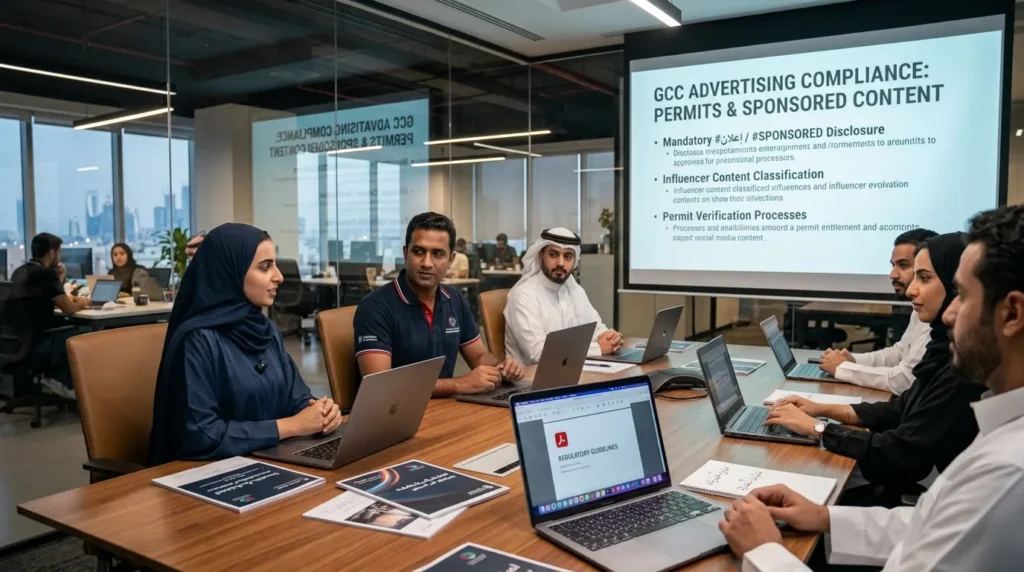
Advertisement rules in the GCC: permits, consent, and influencer content Online Advertisement in Saudi Arabia and the UAE: permits, consent, and influencer content now decide whether a launch goes live or gets stopped, and that is why brands hire a digital marketing specialist in GCC before they spend on ads. The Gulf states share a language and a lot of customers, but each one has its own regulator, its own licence and its own view of what counts as advertising. This guide walks through the rules that matter most in 2026 and how to plan around them. Why advertisement rules in the GCC matter for every campaign? The six GCC countries are Saudi Arabia, the UAE, Qatar, Kuwait, Bahrain and Oman. Many brands treat them as one market and run a single creative across all six. That works for design and tone. It does not work for compliance. Regulators in the region have moved from guidance to enforcement. The UAE now requires an advertiser permit for online ads. Saudi Arabia has asked for a licence for paid creator content since 2022. Data protection laws now exist in every member state, and they affect how you build email lists, send WhatsApp offers and target audiences. The cost of a mistake falls on the brand as well as the creator. Fines, suspended accounts and pulled campaigns all hit the advertiser’s budget and reputation. What a digital marketing specialist in GCC checks first Before writing a single ad, a good specialist asks four questions. Who is the audience, and in which country do they live? Who is publishing the ad: the brand, an agency or an influencer? Does the publisher hold the right permit or licence for that country? Do you have valid marketing consent for every person you plan to contact? If any answer is unclear, the campaign waits. This takes a day or two at the start and saves weeks of cleanup later. The same checklist also gives your legal team something concrete to review instead of a finished campaign they must approve under pressure. Permits: the UAE advertiser permit The UAE Media Council issues the advertiser permit under the federal media law (Federal Decree-Law No. 55 of 2023), with penalties set by Cabinet Resolution No. 42 of 2025. According to Gulf News, individuals advertising on social media have needed a valid advertiser permit since 1 February 2026. Reported requirements include: Applicants should be 18 or older, with exceptions the Media Council may approve. UAE citizens and residents need a trade licence for electronic media. The applicant should have no prior media violations. Creators should follow the Media Council’s content standards and show their permit number on their profile. Reports put fines for serious violations at up to AED 1 million, doubling on repeat offences. Brands are expected to check that every advertiser they work with holds a valid advertiser permit. Fees and grace periods have been reported differently across sources, so confirm the current terms on the official Media Council site before you apply. Permits: Saudi Mawthooq and other GCC markets Saudi Arabia runs its own system. Anyone who earns money from advertising on social media needs a Mawthooq licence from the media regulator, which was first announced by the General Commission for Audiovisual Media. Arab News reported that people who ignore the rule face fines of up to SAR 5 million and a possible prison term of up to five years. Non-Saudi residents and visitors face extra steps. They must apply through the proper channels and generally work through licensed agencies. The Saudi Ministry of Commerce has also warned businesses against promoting visiting celebrities who lack the licence. For Qatar, Kuwait, Bahrain and Oman, rules on influencer content and advertising permits differ and keep changing. Do not assume that a UAE permit or a Mawthooq licence covers you there. A specialist will check each ministry or media authority before the brief goes out. Consent: data protection laws and marketing consent Permits cover who may advertise. Marketing consent covers whom you may contact. Every GCC state now has a data protection regime, as Kennedys outlines in its regional overview. UAE: Federal Decree-Law No. 45 of 2021 on personal data protection. Saudi Arabia: the Personal Data Protection Law, supervised by SDAIA. Qatar: Law No. 13 of 2016, which restricts direct marketing messages sent without consent. Bahrain: Law No. 30 of 2018. Oman: Royal Decree 6/2022, which reportedly asks for express written consent before marketing materials are sent. In practice, good marketing consent is a clear, active choice. Pre-ticked boxes, bought lists and scraped email addresses are poor foundations. Record when and how each person agreed, and make opting out as easy as opting in. The same logic applies to SMS and WhatsApp. UAE telecom policy has long asked licensees to use opt-in processes for electronic marketing, so a channel that feels informal still needs a clean consent trail. Influencer marketing rules: disclosure, contracts, and content standards Influencer marketing is where permits and consent meet. A creator’s followers see a post, but the regulator sees an advertisement. Start with disclosure. Mark paid or gifted posts clearly, in the language your audience reads. Hidden promotions are treated as violations in the UAE, and Saudi rules also ask account holders to flag advertising content. Then fix the paperwork. Your contract with a creator should include: A statement that the creator holds the correct permit or licence for the country of publication. Your approval process for scripts and claims. A duty to remove or edit content when a regulator or the brand asks. Who pays if a fine follows from the creator’s mistake. A useful rule of thumb comes from industry guides: the creator’s publishing location decides which licence applies, while your disclosure standard should follow the audience. When you run influencer marketing across borders, keep one licence record per creator per country. Finally, remember content standards. Religion, public morals, minors and health claims draw close attention across the region, so keep the creative

Uncategorized

Digital marketing in the GCC: what businesses need to know in 2026

Digital marketing in the GCC: what businesses need to know in 2026 Almost everyone in the Gulf is already online. Saudi Arabia had 34.4 million internet users at the end of 2025, about 99% of the population (DataReportal), and the UAE had 11.3 million internet users in October 2025 (DataReportal). Marketing in the GCC is therefore less about reaching people who are new to the internet and more about being the business they find when they search, scroll, or compare prices. datareportaldatareportal I’m Muhammed Nihad, a digital marketer working across SEO, content, social media, paid search, and analytics. This guide takes the current data on Saudi Arabia and the UAE and turns it into a plan for 2026 and early 2027. The numbers behind the market Saudi Arabia had 48.7 million mobile connections in late 2025, equal to 140% of the population, and the median mobile download speed was 194.49 Mbps. The median age was 29.6 (DataReportal). Connections that fast make a slow website your own problem, not a network problem. datareportal Payments have moved online too. The Saudi Central Bank reported that electronic payments made up 85% of retail payments in 2025, up from 79% in 2024 (SAMA). If your checkout handles mada and local cards badly, you lose sales before any ad has a chance to work. sama Arabic and English both matter Treating the GCC as one English-speaking market leaves a lot of search traffic on the table. Arabic is the content language of only 0.6% of websites whose language W3Techs can identify (W3Techs, August 2026). That doesn’t guarantee low competition in every niche, but it is a good reason to test Arabic pages for your own category. w3techs A few practical points: Research Arabic keywords separately from English ones. Direct translations often miss how people search. Use natural, local-sounding Arabic in ads and cleaner Modern Standard Arabic on formal pages. Build right-to-left layouts properly and mark up language versions with hreflang. Google asks that each language version list itself and all the others, and says translated versions count as duplicates only if the main content stays untranslated (Google Search Central). google SEO: where high-intent searches happen People who search on Google are usually close to a decision, which keeps SEO one of the cheaper channels in the region. What I would prioritize: Pages that match searches with a place in them, such as “digital marketing services in Riyadh” or “marketing agency in Dubai”. A complete, active Google Business Profile for any business with a physical location. Fast mobile pages, since mobile is where most visits happen. Original content that answers a real question with specifics, not recycled summaries. On AI search, Google’s own guidance is plain. No special optimization is required for AI Overviews and AI Mode, and the usual SEO fundamentals still apply. Traffic from those features is counted in your normal Search Console reports (Google Search Central). So there is no separate AI playbook to buy. Good SEO is the playbook. bugsmashgoogle Social platforms: where Gulf audiences spend time The figures below come from DataReportal’s 2026 Saudi report, which draws on each platform’s own advertising tools. They measure ad reach, not monthly active users, so treat them as estimates. Platform Ad reach in Saudi Arabia, late 2025 YouTube 27.5 million Snapchat 25.3 million Instagram 18.2 million X 15.0 million LinkedIn 12.0 million (registered members) Snap’s ad tools indicate that 89% of Saudi adults use Snapchat. TikTok’s ad reach among adults grew 17.7% over the year, and X’s fell 6.8%, though DataReportal warns that X’s figures fluctuate a lot. About 75% of LinkedIn’s ad audience in Saudi Arabia is male (DataReportal). TikTok’s adult ad reach comes out higher than the adult population itself, which DataReportal flags as a data quirk, so I wouldn’t quote it as a head count. datareportal Pick platforms by where your customers are and what you sell. Snapchat and TikTok suit consumer products aimed at younger buyers. LinkedIn suits B2B, with the male skew in mind. Influencer marketing and permits Working with creators is regulated in both countries, and brands share the responsibility. In Saudi Arabia, content creators who earn revenue from social media advertising must apply for a permit from the General Commission for Audiovisual Media, known as Mawthooq (Arab News). In the UAE, the UAE Media Council announced an advertiser permit for anyone who publishes promotional content on social media, paid or not, with an exemption for people promoting their own business through a personal account (The National). The obligations also reach agencies, PR firms, and brands that pay for or facilitate promotional content, and creators must show their permit number on their profiles (Pinsent Masons). All you need to know about Saudi Arabia’s new social media influencer permit +2 Rules like these get updated, so check with the authorities before a campaign and ask any creator for proof of their permit before you sign. Paid search and social ads Google Ads captures people who are already searching. Meta, Snapchat, and TikTok ads work better for discovery and retargeting. Whatever you run, track cost per lead and return on ad spend instead of clicks, and set budgets against the calendar below. Ramadan and the calendar Few markets are as seasonal as the Gulf. Gulf News reports on UAE data showing that activity peaks late at night between 10pm and 2am during Ramadan, and that Redseer expects UAE Ramadan retail sales to approach $10 billion in 2026 (Gulf News). In Saudi Arabia, buy-now-pay-later provider Tamara reports that spending rose 34.7% in the week before Ramadan 2025, reaching $4.6 billion (Tamara). That figure comes from a payments company, so read it as one vendor’s view. gulfnewstamara Ramadan 2027 is expected to start in early February, which means campaign planning belongs in the next few weeks. Mark these dates too: Saudi Founding Day (22 February), Saudi National Day (23 September), UAE National Day (2 December), and the White Friday sales in late November. Privacy and compliance Both countries require consent for

Snapchat and Tiktok
Uncategorized

How Snapchat and TikTok are changing marketing in the Gulf?

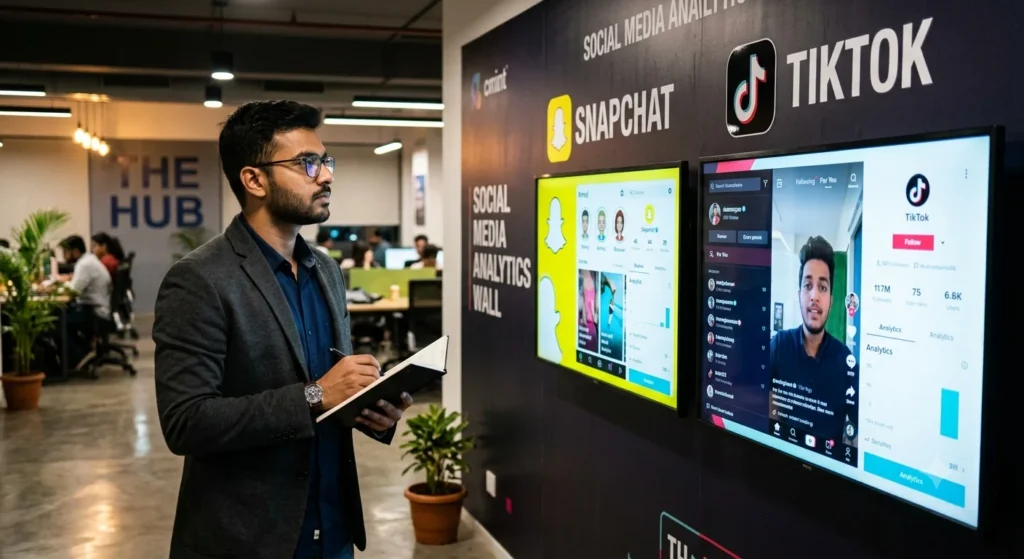
How Snapchat and TikTok are changing marketing in the Gulf ? In Saudi Arabia, Snapchat’s potential advertising reach hit 25.3 million by late 2025, about 72.9% of the population, according to Communicate Online’s summary of DataReportal’s 2026 Saudi report. TikTok is larger. DataReportal’s Digital 2026 Saudi Arabia report shows 38.6 million TikTok users aged 18 and over in the country, and Statista reports that Saudi Arabia and the UAE have the highest TikTok reach among adults of any country, at 154.3% and 134.6%. A reach above 100% looks like a mistake, but Statista attributes it to duplicate and fake accounts and mismatches with census data. The figure counts accounts advertisers can reach, not unique people. The direction is still clear. Snapchat is mostly a Saudi story Dazed MENA reports that 90% of 13 to 34 year olds in Saudi Arabia use Snapchat, opening it about 50 times a day. Snap’s own executives explain this by culture. One told Al Arabiya English in 2023 that the app suits a society that places high importance on family values and privacy, and that messages disappear with no likes or comments. That is the company’s account, so it’s a partial answer at best. The UAE looks different. Kolsquare’s 2026 guide puts Snapchat at 5.1 million UAE users, about 49% of adults. That is a lot, but well below Saudi levels. “Gulf” hides real gaps, and as Communicate Online notes, a cultural reference that works in Saudi Arabia can fail in the UAE, and Arabic and English creative need different treatment. What Snapchat offers brands beyond reach Snapchat’s pitch to advertisers is format as much as audience. One agency guide to Snapchat ads in the Gulf says AR lenses and filters give shoppers an interactive try-before-you-buy experience, and that the region is among the most enthusiastic AR markets in the world. It also calls Ramadan the peak Snapchat season, above all in Saudi Arabia. That is an agency’s view, but it matches the way the platform is used, as a place for quick personal updates and chats more than polished posts. TikTok works in both markets Wisdom IT Solutions’ UAE guide, which cites DataReportal, reports 11.3 million TikTok users aged 18 and over in the UAE, and that Dubai is the most-posted city on the platform. Daily use is heavy. The same guide estimates 85 minutes a day in the UAE and Saudi Arabia, while Hovi Digital Lab cites 95 minutes in Saudi Arabia. Hovi also ties that to a young population, 70% under 35, with 99% smartphone penetration. 23HubLab’s 2026 GCC report adds that Arabic content drives 65% of high-engagement posts in Saudi Arabia, and that TikTok’s performance advertising tools have matured enough to measure ROAS directly. Both are agency claims. Commerce is where the sources disagree Selling inside TikTok is the most talked-about shift, and the least settled. Some agency guides say TikTok Shop launched in Saudi Arabia in 2023 or 2024. Seller-side trackers say otherwise. Ecomcrew reports that as of mid-2026 there was no local Seller Center in Saudi Arabia, and sellers could reach Saudi shoppers only through cross-border sellers. Ebrun reported in August 2026, citing unnamed sources, that a Saudi launch is planned for the first quarter of 2027. DPL’s country list found no confirmed launch for the UAE either. Either way, the opportunity is real. Ebrun puts Saudi e-commerce penetration at only around 10%, with beauty sales rising 300% month on month during Ramadan. Entering the market takes SASO product certification and 15% VAT. Attention is not the same as budget Hovi Digital Lab says Snapchat typically gets 5 to 10% of paid social spend in the GCC, while Meta and Google absorb 70 to 80%, and that Snapchat CPCs run 50 to 70% lower than Meta. Meta is also getting pricier. 23HubLab reports average GCC Meta CPMs rising from $7.20 in 2024 to about $8.40 in 2026, with Ramadan CPMs often above $14 to $18. Attention and cost peak at the same time of year, so Ramadan planning starts early. What changes for marketers Three things follow from the sources. Budgets are still weighted toward Meta and Google, so the cheaper attention on Snapchat and TikTok is the gap most likely to close. Plans built for “the GCC” will underperform, because Snapchat is a Saudi-first channel and TikTok is strong in both markets. And automation doesn’t remove the need for local judgment. Communicate Online argues that AI can optimise bids and audiences, but the marketer still has to decide strategy and understand why a reference works in one country and fails in another.

Scroll to Top