
Advertisement rules in the GCC: permits, consent, and influencer content
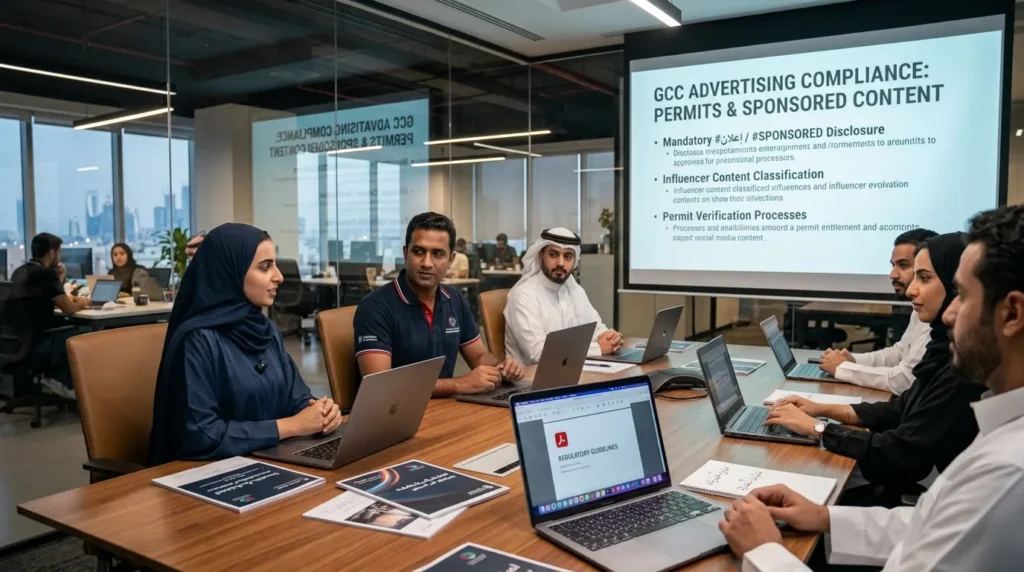
Online Advertisement in Saudi Arabia and the UAE: permits, consent, and influencer content now decide whether a launch goes live or gets stopped, and that is why brands hire a digital marketing specialist in GCC before they spend on ads. The Gulf states share a language and a lot of customers, but each one has its own regulator, its own licence and its own view of what counts as advertising. This guide walks through the rules that matter most in 2026 and how to plan around them.
Why advertisement rules in the GCC matter for every campaign?
The six GCC countries are Saudi Arabia, the UAE, Qatar, Kuwait, Bahrain and Oman. Many brands treat them as one market and run a single creative across all six. That works for design and tone. It does not work for compliance.
Regulators in the region have moved from guidance to enforcement. The UAE now requires an advertiser permit for online ads. Saudi Arabia has asked for a licence for paid creator content since 2022. Data protection laws now exist in every member state, and they affect how you build email lists, send WhatsApp offers and target audiences.
The cost of a mistake falls on the brand as well as the creator. Fines, suspended accounts and pulled campaigns all hit the advertiser’s budget and reputation.
What a digital marketing specialist in GCC checks first
Before writing a single ad, a good specialist asks four questions.
- Who is the audience, and in which country do they live?
- Who is publishing the ad: the brand, an agency or an influencer?
- Does the publisher hold the right permit or licence for that country?
- Do you have valid marketing consent for every person you plan to contact?
If any answer is unclear, the campaign waits. This takes a day or two at the start and saves weeks of cleanup later. The same checklist also gives your legal team something concrete to review instead of a finished campaign they must approve under pressure.
Permits: the UAE advertiser permit
The UAE Media Council issues the advertiser permit under the federal media law (Federal Decree-Law No. 55 of 2023), with penalties set by Cabinet Resolution No. 42 of 2025. According to Gulf News, individuals advertising on social media have needed a valid advertiser permit since 1 February 2026.
Reported requirements include:
- Applicants should be 18 or older, with exceptions the Media Council may approve.
- UAE citizens and residents need a trade licence for electronic media.
- The applicant should have no prior media violations.
- Creators should follow the Media Council’s content standards and show their permit number on their profile.
Reports put fines for serious violations at up to AED 1 million, doubling on repeat offences. Brands are expected to check that every advertiser they work with holds a valid advertiser permit. Fees and grace periods have been reported differently across sources, so confirm the current terms on the official Media Council site before you apply.
Permits: Saudi Mawthooq and other GCC markets
Saudi Arabia runs its own system. Anyone who earns money from advertising on social media needs a Mawthooq licence from the media regulator, which was first announced by the General Commission for Audiovisual Media. Arab News reported that people who ignore the rule face fines of up to SAR 5 million and a possible prison term of up to five years.
Non-Saudi residents and visitors face extra steps. They must apply through the proper channels and generally work through licensed agencies. The Saudi Ministry of Commerce has also warned businesses against promoting visiting celebrities who lack the licence.
For Qatar, Kuwait, Bahrain and Oman, rules on influencer content and advertising permits differ and keep changing. Do not assume that a UAE permit or a Mawthooq licence covers you there. A specialist will check each ministry or media authority before the brief goes out.
Consent: data protection laws and marketing consent
Permits cover who may advertise. Marketing consent covers whom you may contact. Every GCC state now has a data protection regime, as Kennedys outlines in its regional overview.
- UAE: Federal Decree-Law No. 45 of 2021 on personal data protection.
- Saudi Arabia: the Personal Data Protection Law, supervised by SDAIA.
- Qatar: Law No. 13 of 2016, which restricts direct marketing messages sent without consent.
- Bahrain: Law No. 30 of 2018.
- Oman: Royal Decree 6/2022, which reportedly asks for express written consent before marketing materials are sent.
In practice, good marketing consent is a clear, active choice. Pre-ticked boxes, bought lists and scraped email addresses are poor foundations. Record when and how each person agreed, and make opting out as easy as opting in.
The same logic applies to SMS and WhatsApp. UAE telecom policy has long asked licensees to use opt-in processes for electronic marketing, so a channel that feels informal still needs a clean consent trail.
Influencer marketing rules: disclosure, contracts, and content standards
Influencer marketing is where permits and consent meet. A creator’s followers see a post, but the regulator sees an advertisement.
Start with disclosure. Mark paid or gifted posts clearly, in the language your audience reads. Hidden promotions are treated as violations in the UAE, and Saudi rules also ask account holders to flag advertising content.
Then fix the paperwork. Your contract with a creator should include:
- A statement that the creator holds the correct permit or licence for the country of publication.
- Your approval process for scripts and claims.
- A duty to remove or edit content when a regulator or the brand asks.
- Who pays if a fine follows from the creator’s mistake.
A useful rule of thumb comes from industry guides: the creator’s publishing location decides which licence applies, while your disclosure standard should follow the audience. When you run influencer marketing across borders, keep one licence record per creator per country.
Finally, remember content standards. Religion, public morals, minors and health claims draw close attention across the region, so keep the creative respectful and the claims provable.
Common mistakes to avoid
Most problems come from habits, not bad intent.
- Assuming one permit covers every GCC country.
- Paying creators without checking their permit or licence.
- Emailing a purchased list.
- Reusing a UAE offer in Saudi Arabia without a local review.
- Skipping a clear label on gifted products.
- Forgetting that agencies and brands share the risk.
How to hire a digital marketing specialist in GCC?
Look for someone who has run campaigns in more than one Gulf market and can explain, in plain words, how the advertiser permit differs from Mawthooq. Ask how they build consent into lead forms, and how they vet creators before signing them.
A strong digital marketing expert in GCC will also give you a written compliance checklist for each campaign, not just a media plan. If you want one person to handle SEO, paid ads and influencer marketing under these rules, start with a specialist who already works across the region, such as Muhammed Nihad.
Key takeaways
- The UAE requires an advertiser permit for online ads from 1 February 2026.
- Saudi Arabia requires a Mawthooq licence for paid social media content.
- Every GCC state has a data protection law, and marketing consent should be active and recorded.
- Influencer marketing needs clear disclosure, written contracts and a licence check for each creator.
- Rules change often, so verify with official sources before launch.
Frequently asked questions
Do I need a permit to run ads in the UAE?
If you publish advertising content on social media or other digital platforms from the UAE, you need an advertiser permit from the UAE Media Council. Reports say this has applied since 1 February 2026. Check the Council’s website for the current fee and eligibility rules.
Does a UAE advertiser permit work in Saudi Arabia?
No. Saudi Arabia has a separate Mawthooq licence for paid social media content. A creator who earns from ads in the Kingdom needs that licence, whatever permits they hold elsewhere.
Is marketing consent required for WhatsApp and SMS offers?
Generally yes. GCC data protection laws and telecom policies point towards opt-in for electronic marketing. Keep a record of how each person agreed, and offer an easy way to opt out.
Can a specialist handle compliance for me?
A specialist can build compliance into your campaign plan, vet creators and set up consent forms. For binding legal advice on a specific campaign, still speak to a qualified lawyer in the country concerned.